
What isTelecom ExpenseManagement (TEM)?
Telecom expense management (TEM) is the process of managing an organization’s telecom services, assets, contracts, invoices, usage and costs — across wireless, voice, internet and data circuits. A TEM program keeps an accurate inventory, catches billing errors and unused services, and reduces ongoing telecom spend.
Valicom combines people, process, and technology to eliminate waste, recover overcharges, and make every dollar of telecom spend work harder.
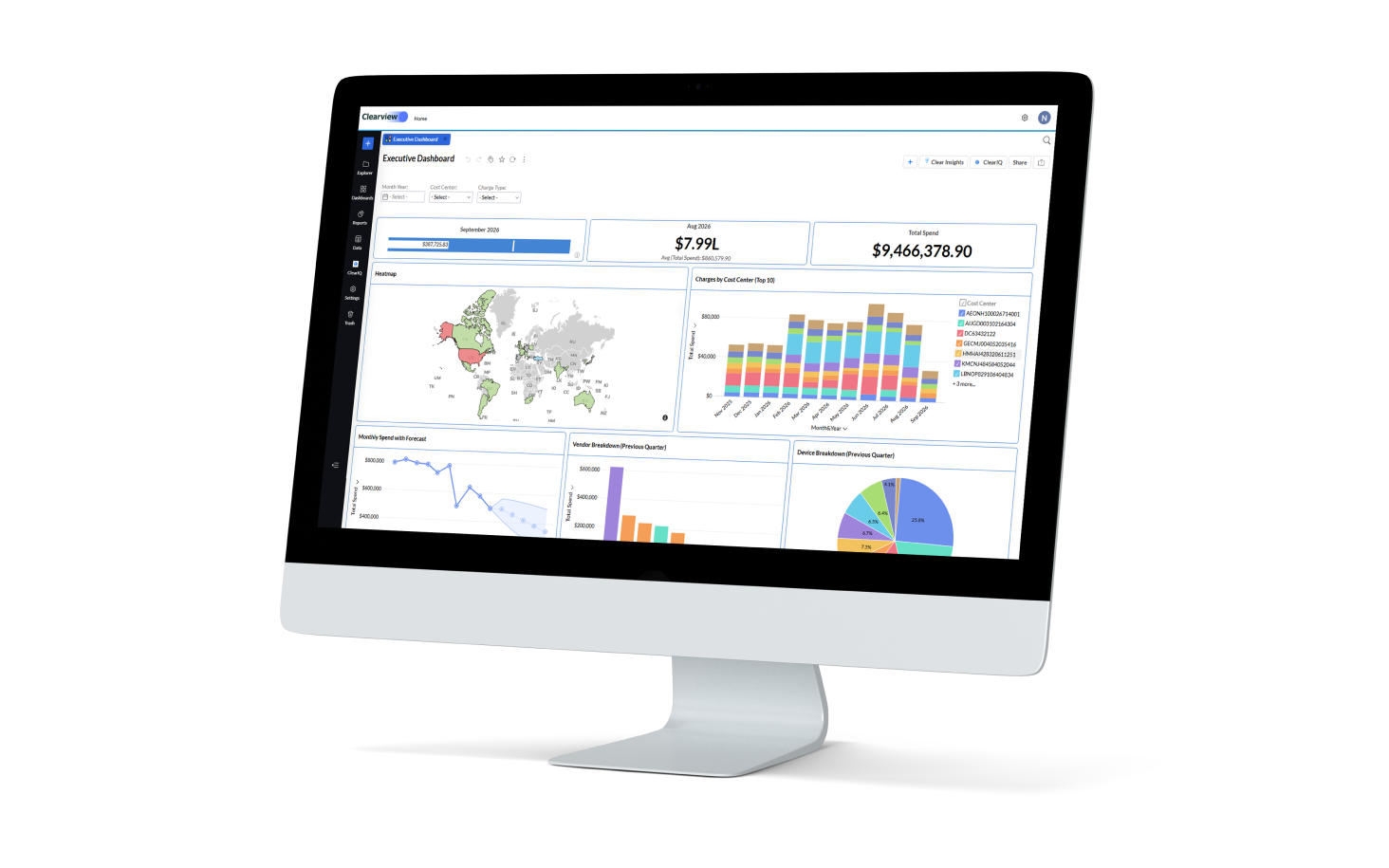
- Inventory Management
- Invoice Auditing
- Wireless Management
- Contract Management
- Reporting & Analytics
The definition
Telecom expense management, clearly defined
Telecom expense management (TEM) refers to the proactive management of all telecom assets and services, covering wireline, wireless, data, internet, mobile, and cloud connectivity, across your organization.
A mature TEM program brings together people, process, and software to give finance, procurement, and IT leaders clear, accurate visibility into what they own, what they use, and what they pay for across every carrier and location. It replaces reactive cost control with disciplined financial governance, so billing errors get caught before they compound, unused services get eliminated before they multiply, and leadership makes technology decisions based on real data.
- 10–30%typical savings on annual telecom spend
- 78%of audited accounts contain billing errors
- 12%of telecom budgets wasted on average
Telecom expense management is not a product you buy. It is a discipline you build – with the right people, processes, and platform working together.
Most organizations have no single source of truth for their telecom environment. Services are tracked in spreadsheets. Invoices are approved without validation. Contracts expire without renegotiation. TEM closes that gap — systematically and continuously, not just once at the start of an engagement.
- 35+
- years Valicom has delivered TEM
- 3.94/4
- avg client satisfaction rating
What TEM covers
The full scope of telecom expense management
A complete TEM program is not a single tool or a one-time audit. It spans the entire lifecycle of your telecom environment from initial discovery through ongoing optimization and vendor governance.
A complete telecom expense management program brings several functions together. It starts with an accurate telecom inventory, then layers on telecom invoice management to validate and pay every carrier bill, and a telecom expense audit to recover billing errors and overcharges. Day-to-day changes are handled through MACD management (moves, adds, changes and disconnects), while TEM software gives finance and IT full visibility. Organizations that prefer a done-for-you model rely on telecom expense management services that combine the platform with a dedicated analyst team.
Inventory Management
A centralized, accurate record of every service, circuit, device, and carrier across your organization. Without a clean inventory, everything else in TEM — auditing, billing validation, optimization — is built on guesswork.
Invoice Processing and Auditing
Invoices collected from every carrier, validated against contracts and inventory, and audited for errors, overcharges, and duplicate billing. Discrepancies are flagged and disputed before credit windows close.
Wireless and Mobility Management
Usage analysis across your entire mobile fleet — identifying zero-use lines, oversized data pools, and devices assigned to departed employees. Recommendations are specific, savings are documented.
Contract Management
Visibility into every agreement, renewal window, and rate commitment. TEM ensures you enter renegotiations with benchmark data and usage history — not a carrier’s proposal and a deadline.
Dispute Management
Billing errors don’t fix themselves. TEM includes the full dispute cycle — filing claims, working carrier escalation paths, tracking credit status, and confirming correct application to future invoices.
Bill Payment and Cost Allocation
Validated invoices routed through approval workflows and paid accurately on time. Costs allocated to departments, cost centers, and general ledger accounts — removing the manual burden from AP teams.
Usage Analysis and Optimization
Ongoing analysis of service usage against actual business needs — identifying redundancies, right-sizing plans, and flagging legacy technology ready for modernization before it becomes a budget anchor.
Reporting, Alerts, and Analytics
Spend visibility by carrier, location, service type, and cost center. Variance alerts, trend reporting, and executive dashboards that turn raw telecom data into decisions leadership can act on.
Order and MACD Management
Moves, adds, changes, and disconnects — managed precisely and tracked through to completion. Every change is validated in the inventory the moment it happens, keeping billing reconciliation accurate in real time.
The TEM lifecycle
TEM is a continuous cycle, not a one-time fix
One of the most common misconceptions about telecom expense management is that it is a project with a start and an end. In reality, TEM is an ongoing program that continuously adapts as your organization grows, as carriers update their billing systems, and as your technology environment evolves.
Billing errors recur. Services accumulate. Contracts expire. New locations come online and old ones close. Without a continuous TEM program in place, the savings from an initial audit erode quickly, and the errors you caught this year reappear next year undetected. The organizations that get the most from TEM treat it as a permanent operational discipline, not a one-time remediation effort.
- 1
Discover and Inventory
Capture every device, circuit, user, and service. Build the foundation everything else depends on.
- 2
Collect and Normalize
Standardize invoices, contracts, and usage data across all carriers for accurate, apples-to-apples analysis.
- 3
Validate and Audit
Compare every invoice against contracts, inventory, and prior billing. Identify errors, duplicates, and anomalies before they compound.
- 4
Optimize Usage and Costs
Right-size plans, eliminate unused services, and flag legacy technology. Turn findings into documented, actionable savings.
- 5
Manage Contracts and Vendors
Track renewal windows, benchmark rates, and renegotiate from a position of knowledge — not urgency.
- 6
Pay, Allocate, and Report
Approve validated invoices, process payments on time, allocate costs accurately, and deliver clear reporting to leadership.
- 7
Review and Improve
Repeat the cycle, incorporating changes in your environment. The program becomes more valuable the longer it runs.
TEM vs technology expense management
Telecom vs technology expense management: what is the difference?
The terms are often used interchangeably, but they refer to different scopes of management. Understanding the distinction helps organizations decide which approach fits their environment.
Telecom Expense Management
- Wireline voice, data, and internet services
- Wireless and mobile devices and plans
- MPLS, SD-WAN, and network circuits
- Carrier contracts, rates, and billing
- Toll-free, conferencing, and long-distance
- Primary goal: eliminate billing errors, recover credits, and optimize carrier spend
- UCaaS and cloud communications (VoIP, Teams Calling, Zoom Phone, etc.)
Technology Expense Management
- Everything in telecom expense management
- Cloud infrastructure (IaaS/PaaS)
- Software licenses and subscriptions
- Hardware and device lifecycle management
- IT infrastructure and managed services
- Primary goal: unified visibility and governance across all technology spend
- Enterprise-wide spend analytics and financial governance
Valicom’s perspective: Most organizations start with telecom expense management, where the billing complexity and error rates are highest, and expand their program as they gain visibility. Whether you need focused telecom management or a broader technology expense management approach, the foundation is the same: accurate inventory, continuous auditing, and dedicated analyst expertise.
Who needs TEM
TEM is for any organization where telecom complexity exceeds internal capacity
Size matters less than complexity. The question is not how large your organization is. It is whether your team has the bandwidth, specialization, and tools to manage telecom billing at the level it demands.
Finance and CFO Teams
Need validated telecom costs, accurate allocations, and spend forecasting that does not require manual reconciliation every month.
IT and Network Teams
Need accurate inventory, change tracking, and vendor accountability — without spending their days chasing carrier billing departments.
Procurement
Need market benchmark data, contract visibility, and usage history to negotiate from a position of knowledge at every renewal.
Accounts Payable
Need invoices that arrive validated and approved — not hundreds of carrier bills requiring manual review before payment.
Self-check
Signs your organization needs a TEM program
Invoices approved without line-item validation
Your AP team processes carrier invoices without comparing them to contracted rates, inventory, or prior months. Errors get paid without question.
No accurate inventory of what you actually own
Services are tracked in spreadsheets, if at all. Nobody can reliably answer what circuits, lines, or devices the organization currently has active.
Billing errors discovered months or years too late
By the time someone notices a recurring overcharge, the carrier’s dispute window has closed and the credits are permanently gone.
Services still billing after disconnection
Lines assigned to former employees, circuits at closed locations, and disconnected services that never stopped generating monthly charges.
Contract renewals happening on the carrier’s timeline
Renewal deadlines arrive unexpectedly. No benchmark data available. No leverage. The carrier sets the terms.
Leadership has no visibility into telecom spend
No dashboards, no trend data, no spend by location or cost center. Telecom is a black box on the P&L with no path to optimization.
Tap the signs that sound familiar
Each sign is a place where money leaks out of your telecom budget.
Start a Conversation →The benefits of TEM
What organizations actually gain from telecom expense management
The surface-level benefit is cost savings. The deeper benefit is the operating model that makes those savings permanent rather than one-time.
- 01
Direct cost reduction
Billing error recovery, unused service elimination, wireless right-sizing, and contract renegotiation combine to produce measurable, bottom-line savings — typically 10 to 30 percent of annual telecom spend.
- 02
Complete spend visibility
A single, accurate view of every telecom dollar spent — by carrier, location, service type, department, and cost center. Finance leaders get the data they need to budget, forecast, and chargeback with confidence.
- 03
Reduced administrative burden
Invoice processing, dispute management, payment workflows, and cost allocation — handled systematically rather than manually. IT and finance teams reclaim time for work that actually moves the business forward.
- 04
Vendor accountability
Carriers bill correctly when they know someone is checking. Accurate inventory and systematic audit processes create accountability that reduces errors over time, not just in the first billing cycle after engagement.
- 05
Stronger contract negotiations
Market benchmark data, usage history, and spend analysis give procurement teams the leverage they need to demand better terms at every renewal — rather than accepting whatever the carrier proposes.
- 06
Savings that compound over time
A continuous TEM program catches new errors as they appear. Each billing cycle, the program is running — which means errors are identified in weeks, not after years of undetected overpayment.
How Valicom delivers TEM
What does a telecom expense management program include?
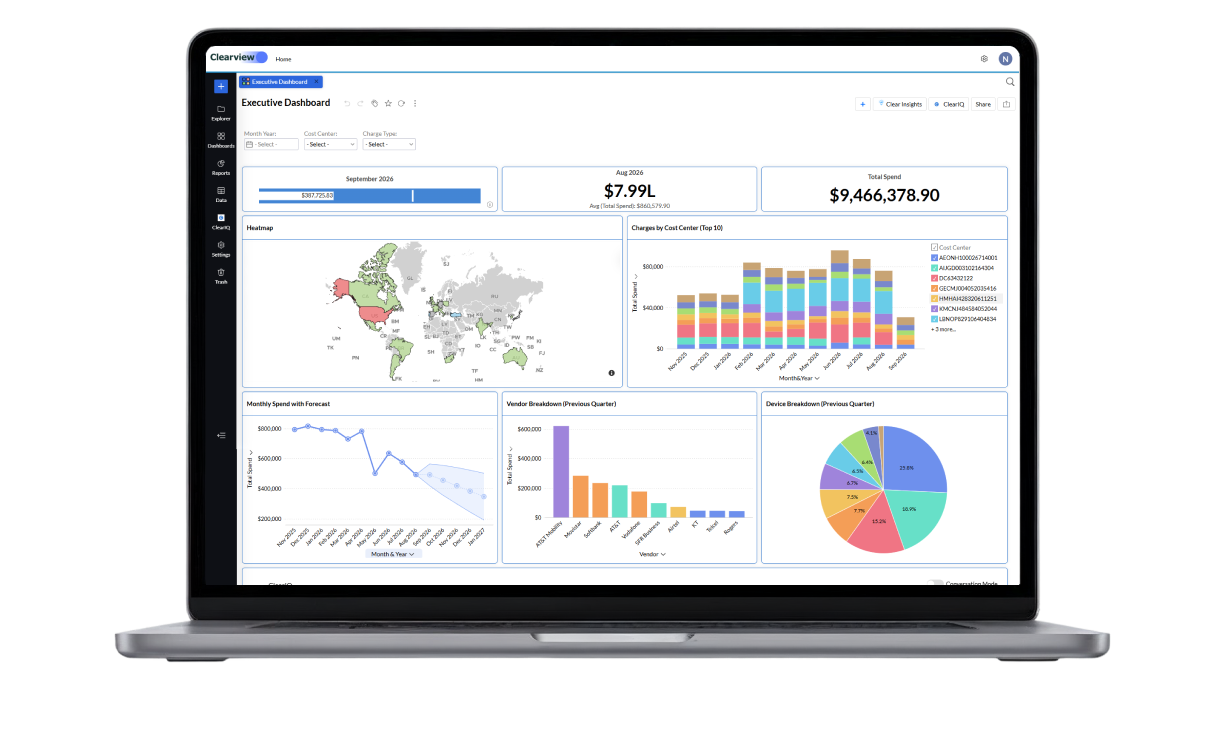
Most TEM providers offer a platform and leave the work to you. Valicom combines our Clearview TEM software with a dedicated analyst team that runs the program on your behalf — so the savings are real, not theoretical.
Automated tools catch what the rules detect. Valicom’s analysts catch what requires judgment — the contract nuance a carrier billing system missed, the rate that reverted after a promotion expired, the circuit that should have disconnected but didn’t. That combination is what consistently delivers results that software alone cannot.
35+ years of telecom billing expertise
Our analysts have seen every carrier billing pattern, every dispute tactic, and every type of error — across every major carrier in the market.
Vendor-neutral, always
No carrier kickbacks, no referral arrangements, no financial relationships that influence our recommendations. Every finding is made in your interest only.
Dedicated analyst team per client
You get a named team that knows your accounts, your contracts, and your environment — not a shared queue of generalist support staff.
Continuous, not one-time
Monthly audit cycles, ongoing dispute management, and real-time inventory tracking — so your TEM program delivers compounding value, not a single report.
Clearview: purpose-built TEM software
Over 60 standard reports, unlimited custom reporting, and a cradle-to-grave platform covering inventory, invoices, contracts, ordering, and bill payment in one place.
Common questions about telecom expense management
TEM stands for Telecom Expense Management, the practice of managing an organization's telecom costs, contracts, services and inventory across wireline, wireless, data and cloud. The same acronym is sometimes used for Technology Expense Management, a broader approach that also covers IT and cloud spend such as SaaS subscriptions and cloud services.
The main benefits of telecom expense management are lower costs, full visibility and less manual work. TEM typically reduces telecom spend by 10–30% by catching billing errors, unused services and overpriced plans. It gives finance and IT one accurate view of every carrier, invoice, service and device, and it automates invoice processing, cost allocation and bill payment so internal teams spend less time on paperwork.
TEM pricing varies by provider and program structure. Some providers charge a flat monthly fee based on invoice volume or portfolio size. Others, like Valicom's Shared Savings model, charge only a percentage of the savings and credits recovered, meaning there is no upfront cost and payment is tied entirely to results. In most cases, a well-run TEM program generates savings that substantially exceed its cost, often delivering a positive ROI within the first 6-9 months of the engagement.
TEM delivers the greatest value where telecom complexity exceeds internal capacity — which typically begins when an organization has multiple carriers, multiple locations, or a large wireless fleet. Organizations spending $200,000 or more annually on telecom typically see a clear ROI from a TEM program. Enterprise organizations with millions in telecom spend almost always leave substantial recoverable savings on the table without one.
Internal review is limited by bandwidth and specialization. Your team can check that invoices arrived and totals look reasonable — but validating every line item against contracted rates, cross-referencing against a live inventory, identifying tax misapplications, and managing carrier disputes requires dedicated expertise and purpose-built tooling. Valicom's analysts review hundreds of carrier invoices per month across dozens of clients and bring pattern recognition to your account that no internal generalist can replicate.
Yes. A full TEM program covers your entire telecom environment — wireline voice and data, wireless and mobility, internet and WAN circuits, UCaaS, toll-free, conferencing, and cloud connectivity. Many organizations have historically focused TEM attention on wireline and left significant wireless savings unaddressed. Valicom audits both comprehensively, and wireless optimization frequently represents the largest individual savings category for organizations with distributed mobile fleets.
Valicom's TEM solution plays a critical role in legacy telecom migration by providing the inventory visibility and cost analysis needed to plan and execute POTS and PSTN transitions effectively. Clearview maintains a detailed, up-to-date telecom and IT asset inventory — organizing and updating telecom and wireless inventory data, listing all devices, plans, circuits, and lines, and properly associating telecom inventory with locations, users, and GL codes. With the copper sunset accelerating across the US, Valicom's TEM platform helps organizations identify every legacy line in their environment, assess its current cost and business function, and build a prioritized migration roadmap. By surfacing which POTS lines are active, which are unused, and which are tied to critical systems like alarms or elevators, Clearview enables organizations to migrate strategically rather than reactively.
Learn more
Go deeper on telecom expense management
What is a Telecom Expense Audit?
How a systematic review of your invoices and contracts surfaces billing errors, recovers overcharges, and eliminates unnecessary spend.
Read MoreClearview TEM Software
The platform behind Valicom’s TEM program — inventory management, invoice processing, contract tracking, and over 60 standard reports in one place.
Explore ClearviewInvoice Management and Bill Payment
How Valicom collects, validates, and processes invoices across all carriers — eliminating late fees and removing the monthly scramble from your AP team.
Learn More
Let’s get connected
- Telephone:(608) 274-3515
- [email protected]
- 2923 Marketplace Drive Suite 104
Madison, WI 53719